What Are Peptides — and Why Is Everyone Talking About Them?
If you've spent any time exploring medical aesthetics or functional wellness recently, you've almost certainly encountered the word "peptide." It's on serums, in IV drips, discussed in longevity clinics, and increasingly being prescribed by forward-thinking providers as a cornerstone of modern rejuvenation therapy.
But what are they, really? And why, after decades of quietly operating behind the scenes of human biology, are peptides suddenly the ingredient — and therapy — that everyone is talking about?
The Basics: What a Peptide Actually is
A peptide is a short chain of amino acids — the same building blocks that make up proteins. The difference between a peptide and a protein is simply size: proteins are long chains, peptides are short ones, typically fewer than 50 amino acids linked together.
That small size is actually their superpower. Because peptides are compact, they can slip through biological barriers, bind to specific receptors, and deliver very precise instructions to cells. Think of them as biological text messages — short, targeted signals that tell your body what to do.
Your body produces hundreds of different peptides naturally, each with a specific job. Some stimulate collagen production. Some regulate growth hormone release. Some modulate inflammation. Some direct wound healing. The problem is that as we age, our bodies produce fewer of these signaling molecules — and the ones we do produce become less efficient. The result is the gradual decline in skin quality, energy, recovery, and resilience that most people simply chalk up to "getting older."
Peptide therapy is the science of supplementing or restoring those signals.
How Peptides Deliver Their Message
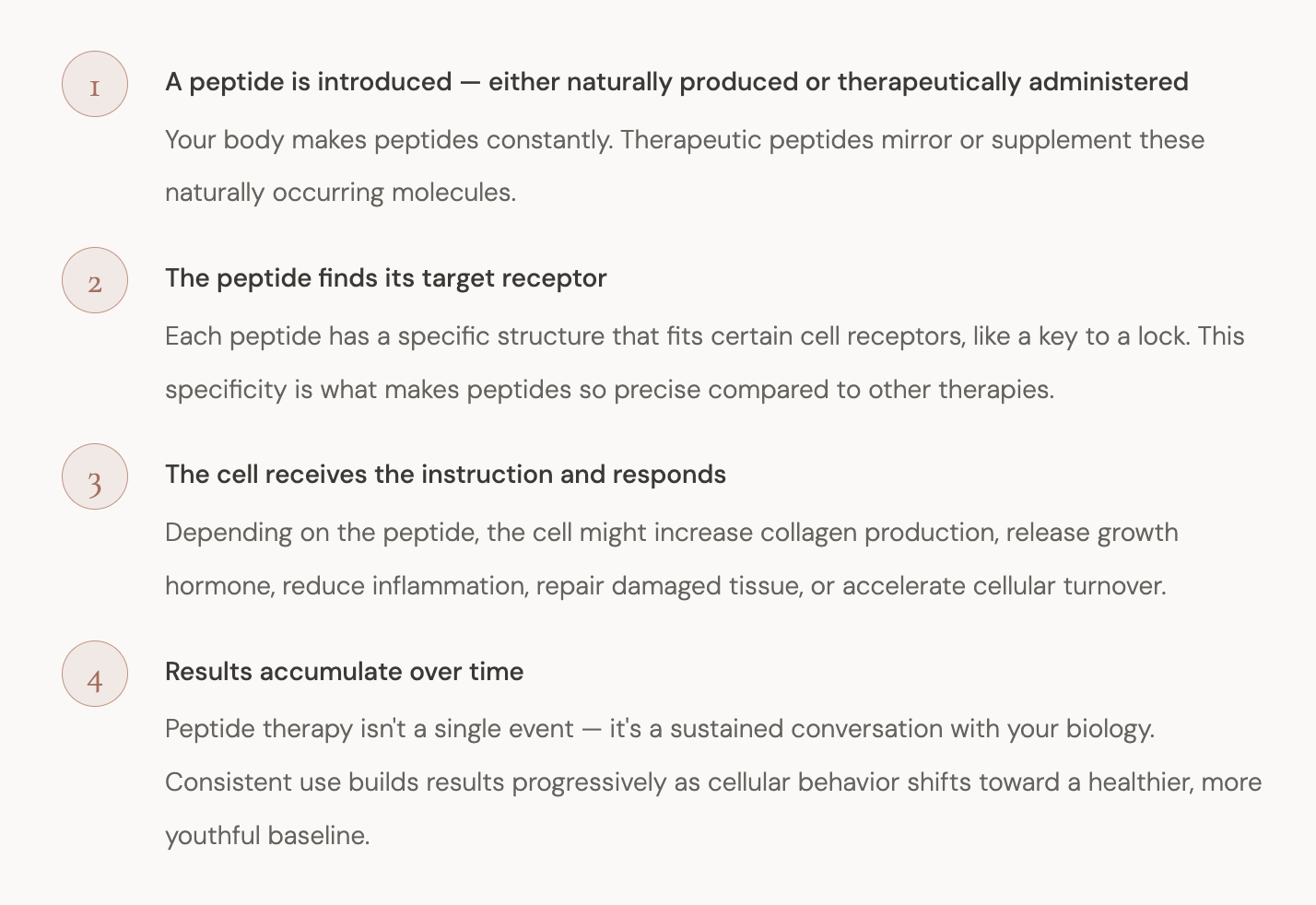
Understanding peptide therapy starts with understanding how your cells receive instructions. Cells don't think for themselves — they respond to signals from the environment. Hormones, neurotransmitters, growth factors, and peptides all work as messengers, binding to receptors on cell surfaces and triggering specific biological responses.
Therapeutic Peptides
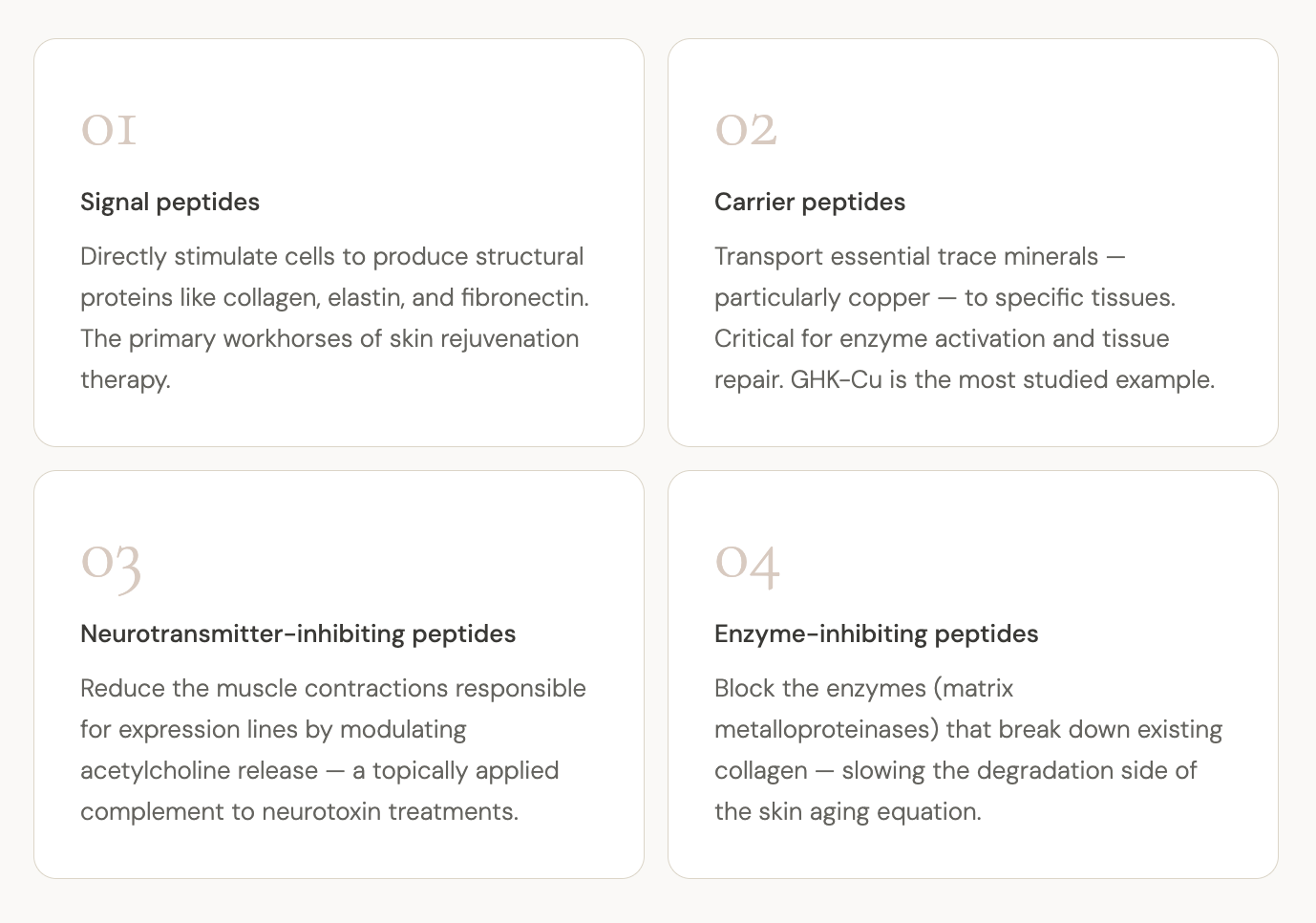
Not all peptides do the same thing. In clinical practice, therapeutic peptides generally fall into four broad categories, each with a distinct mechanism and application.
Peptides don't override your biology. They remind it of what it already knows how to do.
Beyond skin, peptide therapy extends into hormone optimization, immune regulation, energy metabolism, hair restoration, and weight management — areas where the body's natural signaling molecules have declined with age or stress.
Peptides aren't new. Insulin — one of the most important medical discoveries in history — is a peptide, and it's been in clinical use for over a century. What's new is the convergence of three things: dramatically improved synthesis technology that makes a wide range of therapeutic peptides affordable to produce; better delivery systems that allow peptides to reach their targets more effectively; and a growing body of clinical research that has moved many peptides from theoretical interest to evidence-based practice.
The shift in aesthetic and functional medicine has followed. Where treatments once focused primarily on masking or temporarily correcting the signs of aging, a new generation of providers is focused on restoring the underlying biology — addressing the root causes of skin laxity, fatigue, hormonal imbalance, and cellular aging at the molecular level. Peptides sit at the center of that shift.
Peptide Myths
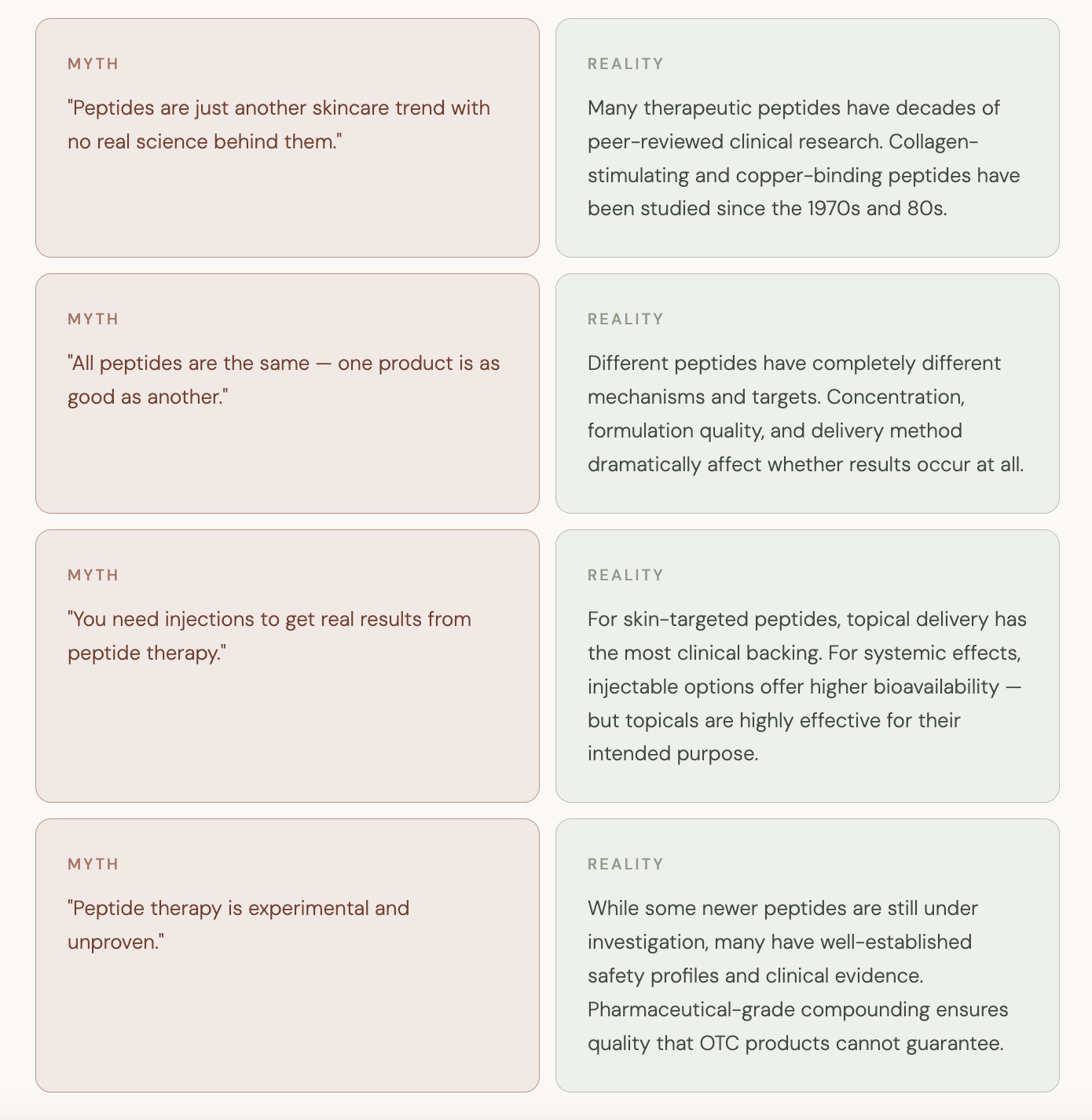
As peptides have moved from specialty clinics into mainstream wellness conversation, a number of misconceptions have spread. Here are the most common ones — and the reality behind them.
Peptide therapy isn't a one-size-fits-all supplement. It's a clinically guided, individually tailored intervention — matched to your skin's specific needs, your hormonal profile, and your wellness goals.
Our dermatology and peptide line includes targeted topical formulations for skin tightening, brightening, collagen restoration, and cellular renewal. Beyond skin, we offer hormone and peptide therapy protocols designed to address the deeper systemic decline that accelerates visible aging — rebalancing, repairing, and optimizing from within.
Every protocol starts with a consultation. Because the best peptide therapy isn't about applying something to your face and hoping. It's about understanding your biology, identifying what's declined, and choosing the right signals to restore it.
Great skin isn't luck. It's science — and it starts with the right conversation. Get in touch with us today and lets talk peptides.