Your Skin Texture Is Trying to Tell You Something
At Pure Vitality Rx, we believe in treating the whole person — not just the surface. Before we ever recommend a treatment, we want you to understand what’s actually happening beneath your skin, why it’s happening, and what a realistic path forward looks like.
What Is Skin Texture, Really?
When patients come to us bothered by “rough texture,” they’re usually describing one of several distinct phenomena, and each has a different cause, treatment pathway, and realistic outcome. Conflating them leads to wrong treatments and disappointed patients. That’s not how we operate.
Rough, uneven surface texture is most often caused by slowed keratinocyte turnover. As we age, a process that begins as early as our late twenties, the rate at which dead skin cells shed from the surface slows significantly. A 28-day cycle in your twenties can stretch to 40–60+ days by your forties, leaving a thicker, duller outer layer that reflects light poorly and makes fine lines appear more pronounced.
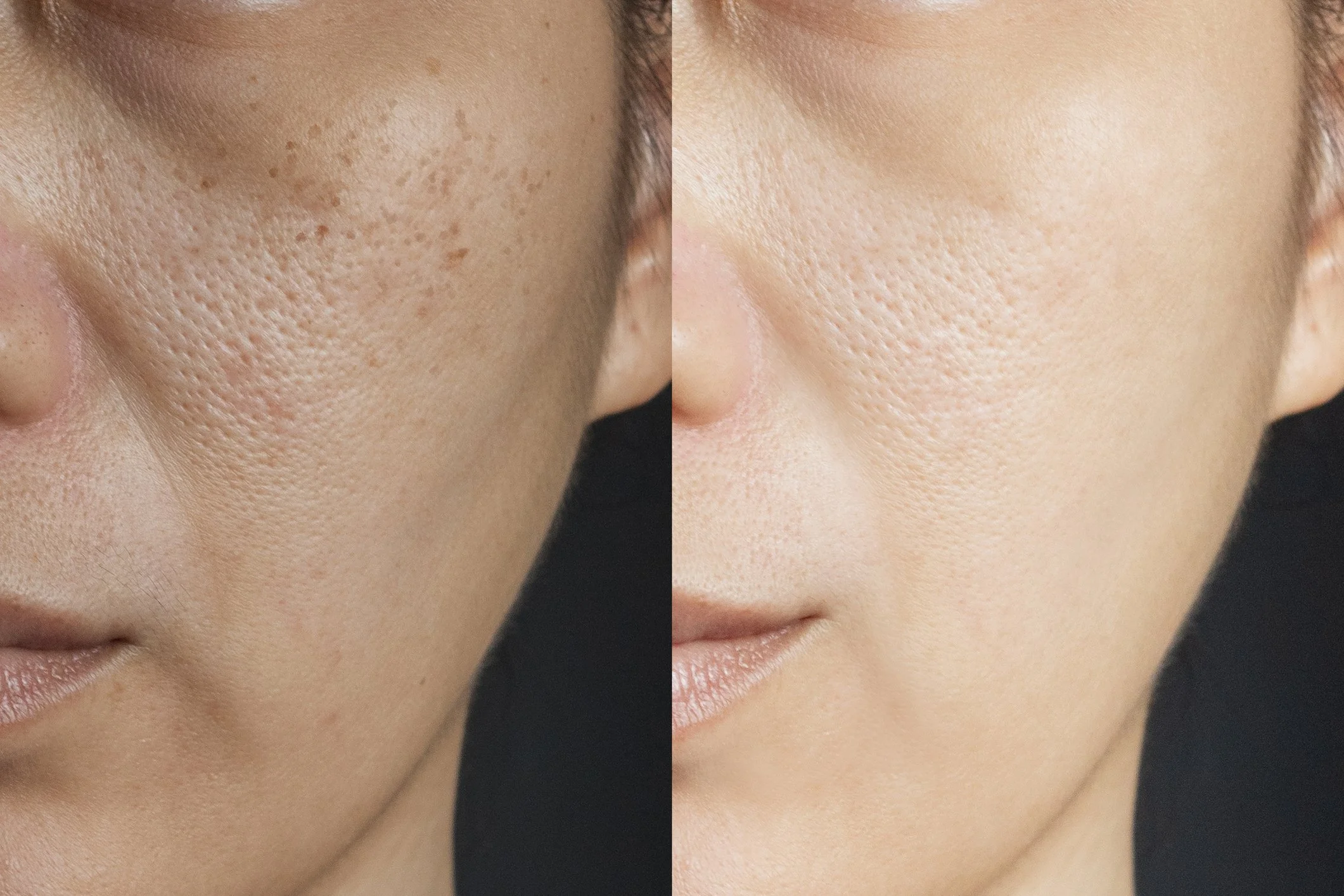
Enlarged pores are primarily structural.
The collagen and elastin framework surrounding each follicle loses integrity over time, causing pores to appear wider. Topical products can temporarily minimize their appearance; only collagen-stimulating treatments can meaningfully improve the underlying structure.
Acne scarring and post-inflammatory texture changes involve actual disruption of the dermal matrix — the collagen scaffolding beneath the skin. These require a fundamentally different approach than simple dullness, and we’ll tell you honestly which category your concern falls into before any treatment is planned.
The Three Treatments We Reach For — And When We Don’t
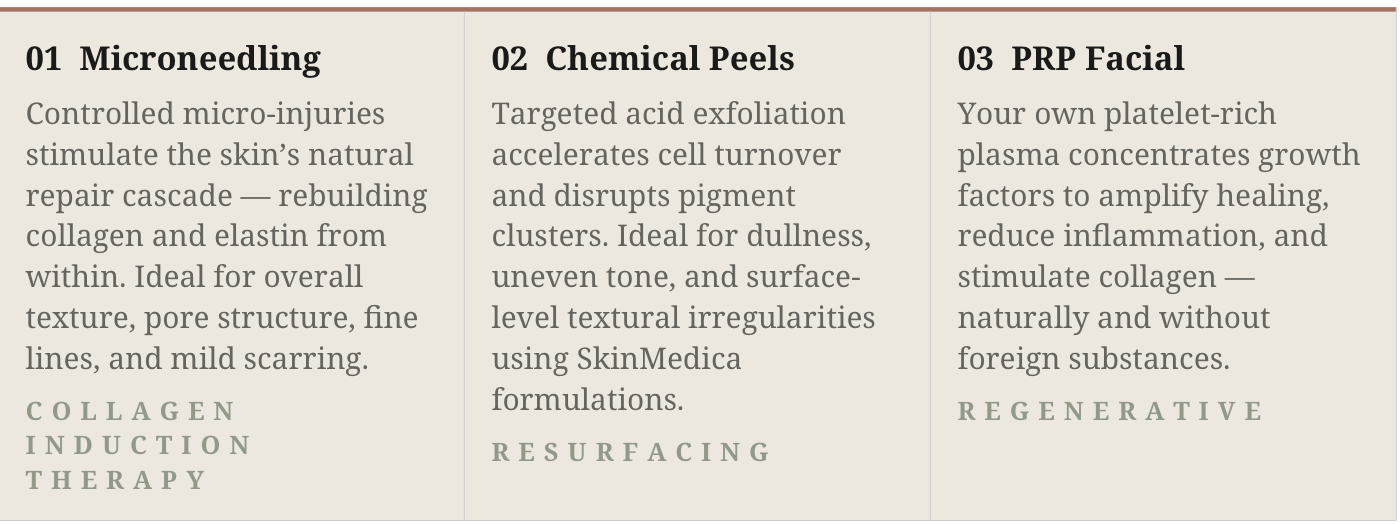
We don’t lead with treatment menus. We lead with assessment. For skin texture, three modalities form the core of our clinical approach, each with a distinct mechanism, ideal candidate, and honest expectations timeline.
Microneedling: What Actually Happens
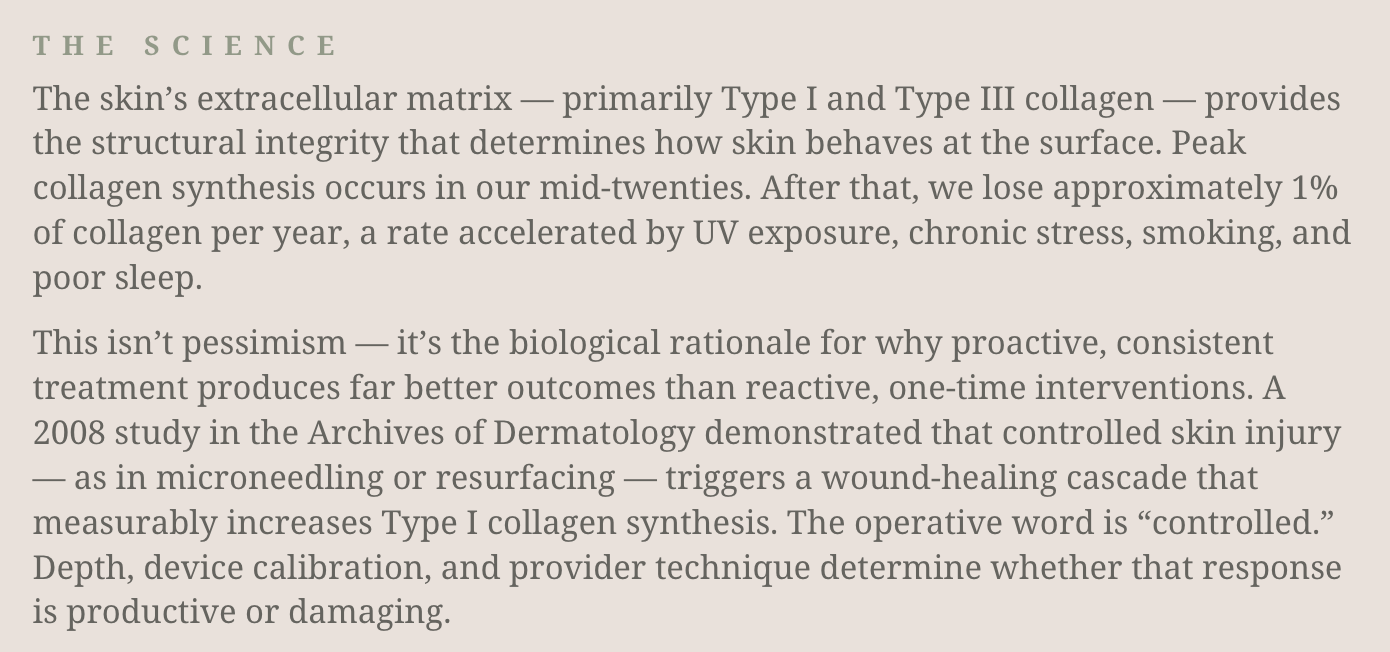
Microneedling, formally called collagen induction therapy, uses a device with fine, sterile needles to create thousands of microscopic channels in the skin at precise, controlled depths. Device quality, needle depth, and provider technique are variables that dramatically shape your outcome.
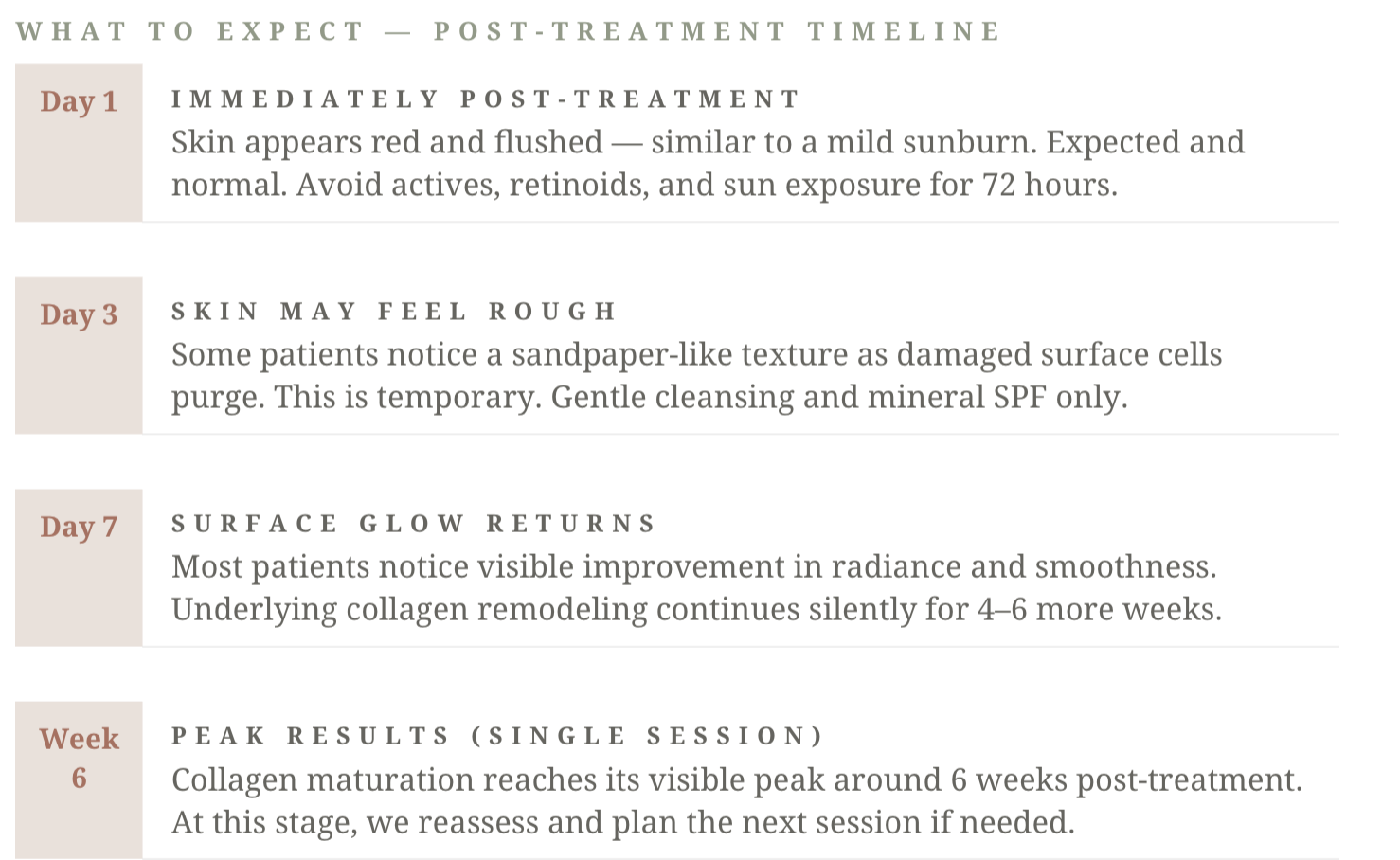
The micro-injuries trigger a three-phase wound healing response: inflammation (0–72 hours), proliferation (days 4–21, when new collagen and elastin are synthesized), and remodeling (weeks to months, as collagen matures and reorganizes). This is why a single session rarely captures the full potential — and why we recommend a series of three sessions spaced four weeks apart for most texture concerns.
Chemical Peels: Matching Depth to Goal
Chemical peels work by disrupting bonds between dead skin cells, accelerating their shedding, and, depending on acid type and concentration, penetrating to different dermal depths to stimulate new cell production and interrupt abnormal pigmentation.
We use SkinMedica chemical peels, chosen for their evidence-based formulations and consistent results across skin types. We match acid type, concentration, and number of passes to your specific concern, Fitzpatrick skin type, and tolerance.
Superficial peels (AHAs like glycolic and lactic acid, low-concentration salicylic) work within the epidermis — excellent for brightening, mild textural improvement, and treating congestion. Minimal downtime, can be done monthly. Medium-depth peels penetrate into the papillary dermis, producing more significant textural improvement and addressing fine lines and early scarring, with 5–10 days of social downtime. In the right candidate, they’re transformative.
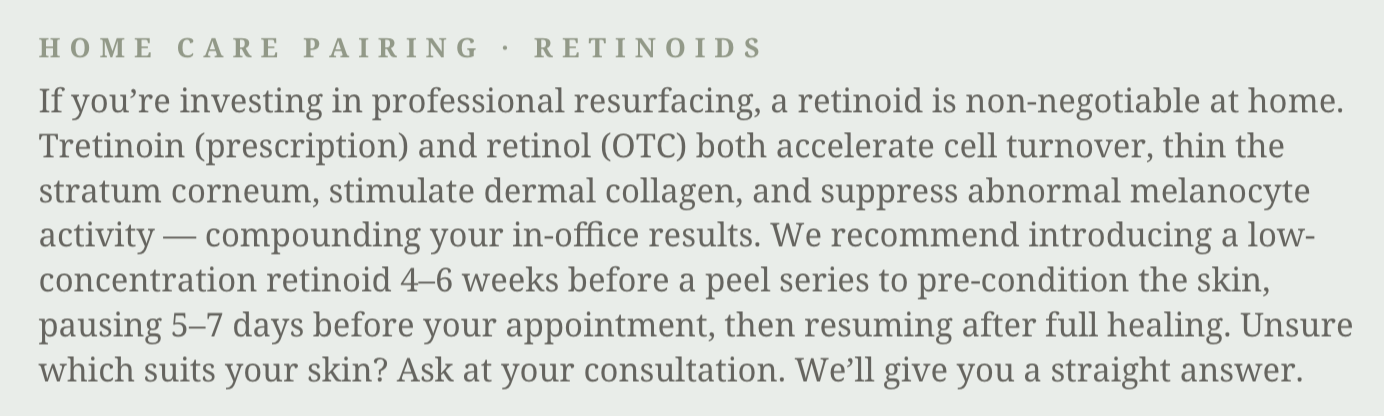
If you’re investing in professional resurfacing, a retinoid is non-negotiable at home. Tretinoin (prescription) and retinol (OTC) both accelerate cell turnover, thin the stratum corneum, stimulate dermal collagen, and suppress abnormal melanocyte activity — compounding your in-office results. We recommend introducing a low-concentration retinoid 4–6 weeks before a peel series to pre-condition the skin, pausing 5–7 days before your appointment, then resuming after full healing. Unsure which suits your skin? Ask at your consultation. We’ll give you a straight answer.
PRP Facials: When We Choose Biology Over Chemistry
PRP therapy draws a small sample of your own blood, spins it in a centrifuge to concentrate the growth-factor-rich platelet fraction, and delivers it back into the skin via microneedling or injection. You’re not introducing a foreign substance — you’re amplifying your own healing capacity.
Platelet alpha granules contain a concentrated supply of growth factors, PDGF, TGF-β, VEGF, and EGF, that coordinate skin repair, stimulate fibroblast activity, and promote new blood vessel formation. The result is improved skin quality, reduced inflammation, and meaningfully enhanced collagen deposition when combined with microneedling versus microneedling alone.
“The goal of PRP isn’t to make you look ‘done.’ It’s to help your skin function the way it did when your biology was younger.”
PRP is especially well-suited for patients cautious about synthetic injectables, those with reactive or sensitized skin, or anyone targeting fine lines, crepiness, and overall skin quality rather than volume loss.
The Piece Most Practices Ignore
What most medspas overlook: the internal aging process. Beautiful skin isn’t just the result of what we apply externally, it reflects what’s happening at the cellular level. Collagen synthesis requires adequate Vitamin C, zinc, and amino acids. Skin hydration is fundamentally tied to systemic fluid balance and electrolyte status. Chronic inflammation is driven by stress, poor sleep, or nutritional gaps and actively degrades collagen and impairs skin barrier function.
Internal Support with Wellness IV Therapy
Our Wellness IV Therapy formulas, particularly our hydration and NAD+ protocols create measurable improvements in skin turgor, radiance, and cellular energy that topical products cannot replicate. Many patients who come in for texture concerns notice their skin looks visibly different after a single IV session. That’s not coincidence. It’s the difference between a well-nourished cell that can execute repair, and a depleted one that can’t.
When We Say No — And Why That Matters
The most valuable thing we offer isn’t a treatment, it’s an accurate assessment. Not everyone who books an appointment should receive the treatment they initially requested. Not every texture concern requires three modalities and a full product suite.
If your skin barrier is compromised, we’ll tell you and we’ll address that first. If your concern is primarily driven by lifestyle factors that no in-office treatment can sustainably overcome, we’ll tell you that too, and give you specific, actionable guidance. If a treatment you’ve requested won’t meaningfully benefit you, or could cause harm, we will say no.
This means we occasionally make less in a single visit. We’re comfortable with that. Our goal is a long-term relationship with patients who trust our expertise, not a transaction.
Building a Home Routine That Works With Your Treatments
We want every patient leaving Pure Vitality Rx with a home protocol that amplifies their in-office results — not one that undermines them.
Morning: Gentle, non-stripping cleanser → Vitamin C serum (L-ascorbic acid, 10–20% in a stable formulation) → Moisturizer → SPF 50 broad-spectrum, reapplied every two hours outdoors. This is the most evidence-backed anti-aging stack in dermatology. Nothing we do in-office compensates for ongoing unprotected sun damage.
Evening: Thorough cleansing → Retinoid (start low — 0.025% tretinoin or 0.3% retinol equivalent — increasing gradually over 8–12 weeks as tolerance builds) → Ceramide-rich moisturizer. If you experience retinoid irritation, try the “sandwich” method: moisturizer first, retinoid second, moisturizer third to buffer.
What to avoid: Layering high-potency actives together — vitamin C + retinoid on the same skin, or AHA/BHA + retinoid — triggers irritation and compromises the barrier your treatments are designed to strengthen. Unsure about your current routine? Bring your products to your consultation. We’ll audit them honestly, at no charge.
Realistic Outcomes: What to Actually Expect
Professional skin treatments produce real, measurable improvements, but they don’t pause biology. Sun damage and collagen loss are ongoing. Treatment is enhancement and maintenance, not a permanent fix. The patients who achieve the best long-term outcomes are those who treat consistently, protect their results with daily SPF and a retinoid, and don’t expect a single session to reverse a decade of damage.
For most patients with mild-to-moderate texture concerns, a well-designed combination protocol produces a meaningful step change in skin quality, smoother surface, reduced pore appearance, improved radiance, and a more even tone. Significant acne scarring and longstanding photodamage take more sessions and more time, but are far from untreatable.
We photograph all patients at baseline and at follow-up so we can review objective improvements together and because progress is often gradual enough that patients underestimate their results without a reference point. We want you to see what we see.
Ready for an Honest Assessment?
Every treatment at Pure Vitality Rx begins with a thorough consultation — no pressure, no predetermined agenda. We’ll listen, assess, and tell you exactly what we think will help.